What's the Deal with Tree Removal Costs?
Let's talk about tree removal costs here in Morgantown. It's one of those things where everyone wants a straight answer, but honestly, it's rarely simple. You're not just paying for someone to show up with a chainsaw, you know? You're paying for expertise, specialized equipment, insurance – and the safe removal of what could be a really dangerous object from your property. I've seen folks get sticker shock, and I've also seen others get ripped off by going too cheap. My goal today is to give you a realistic picture so you know what to expect.
What Factors Drive the Price Tag?
A lot goes into pricing a tree removal job. It's not just the size of the tree, though that's definitely a big one. Here's what we're looking at when we give you a quote:
Tree Size: This is probably the biggest factor, no surprise there. A small ornamental tree, maybe 15-20 feet tall, is a lot easier and quicker to take down than, say, a towering oak that's 80 feet high. Taller, wider trees mean more work, more time, and often, more specialized equipment.
Location & Accessibility: Is the tree in your front yard with easy access for a bucket truck? Or is it tucked away behind your house on a steep slope in Suncrest? If we can't get equipment close, it means more manual labor, more rigging, and more time. Trees hanging over your house, garage, or power lines also increase the complexity and risk, which naturally means a higher price.
Tree Condition: A healthy, structurally sound tree is generally safer to remove than one that's dead, diseased, or rotting. Dead trees can be brittle and unpredictable, making them much riskier to climb and cut. Storm-damaged trees, especially those split or leaning precariously, also fall into this higher-risk category. They're just tougher to manage.
Cleanup & Debris Removal: Do you want us to haul away every single branch and chip, or are you happy to keep some wood for firewood or let us leave the wood chips? Full cleanup and hauling is almost always included in a quote, but if you're willing to do some of the work yourself, you might save a few bucks. It's an option, anyway.
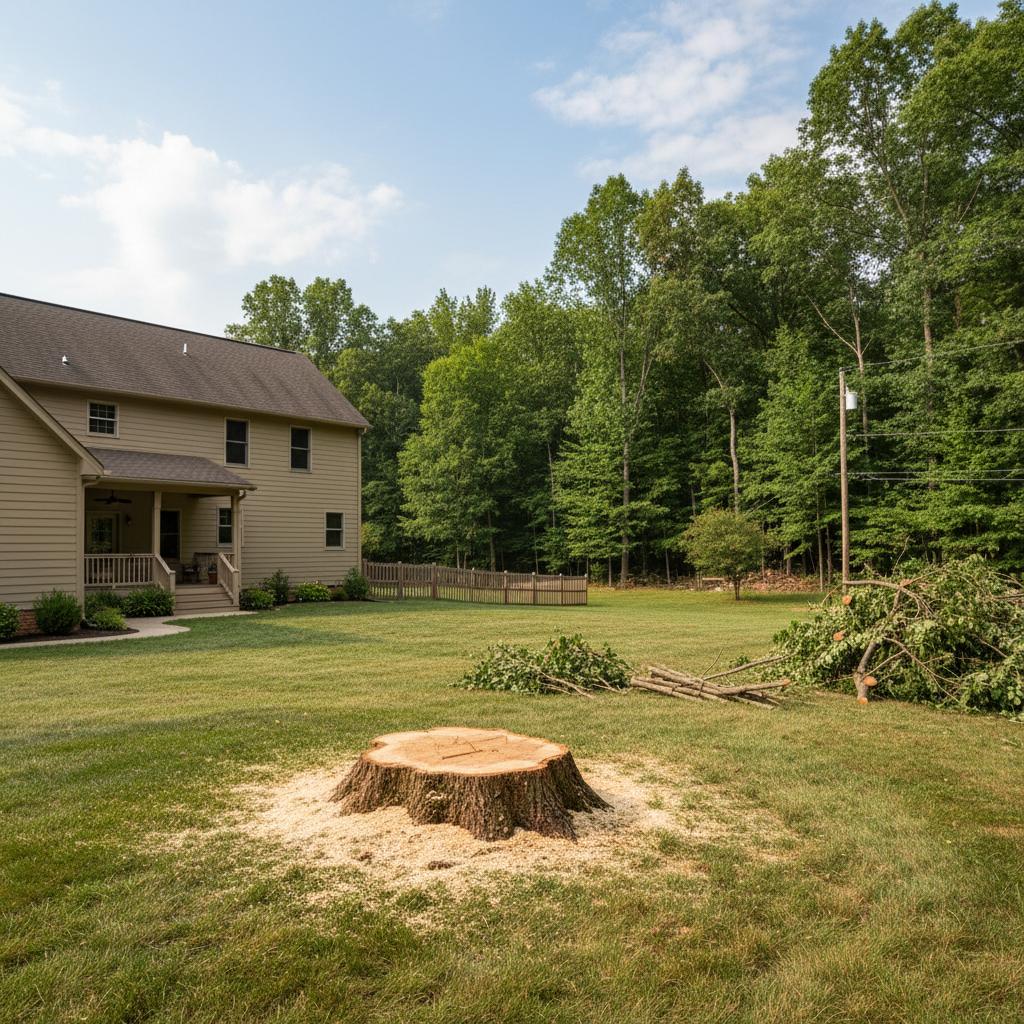
Stump Grinding: This is usually an add-on service. When we remove a tree, we typically cut it down to about 2-6 inches above the ground. If you want that stump gone completely, below ground level, that's stump grinding, and it's an extra cost. We'll always ask you about it, of course.
Typical Tree Removal Cost Ranges in Morgantown
Alright, let's get to some numbers. Keep in mind these are averages, and your specific situation could be higher or lower. This is what I've seen homeowners pay around here:
Small Trees (under 30 feet): Think small ornamental trees, young evergreens, or some fruit trees. You're generally looking at $200 - $600. If it's super easy to access and not near anything, it might be on the lower end.
Medium Trees (30-60 feet): This covers a lot of common residential trees like maples, smaller oaks, or pines. For these, expect to pay anywhere from $400 - $1,200. If it's close to your house or has tricky branches, it'll lean towards the higher end.
Large Trees (60-80 feet): We're talking mature oaks, sycamores, or large poplars. These require more skill, bigger equipment, and more time. Prices typically range from $800 - $2,500. If it's a massive, hard-to-reach tree, especially one overhanging a structure, it could go even higher.
Very Large/Hazardous Trees (over 80 feet or high risk): These are the giants or the ones that are dead, storm-damaged, or in extremely tight spots. These can easily run from $1,500 to $4,000+. Sometimes, we need a crane for these, and that's a significant cost.
Stump grinding usually adds another $100 - $400 per stump, depending on its size and how deep you want it ground.
What Should a Quote Include?
When you get a quote from Mars Family Tree Service or any reputable company, it should be clear and detailed. You want to see:
Specifics of the job: Which tree(s) are being removed?
What's included: Does it cover hauling away all debris? Is stump grinding included or an optional add-on with its own price?
Timeline: An estimated start and completion date.
Proof of Insurance: This is HUGE. Make sure they have liability insurance and workers' compensation. If they don't, and someone gets hurt or your property gets damaged, you could be on the hook. Ask for a certificate of insurance directly from their insurer.
How to Avoid Overpaying (or Getting Scammed)
You don't want to pay more than you have to, but you also definitely don't want to hire the cheapest guy with a pickup truck and a dull saw. Here's my advice:
Get Multiple Quotes: Always get at least three quotes from different reputable, insured companies. This helps you compare prices and understand the range for your specific job.
Don't Automatically Go for the Lowest Bid: The cheapest option isn't always the best. If one quote is significantly lower than the others, it's a red flag. They might not be insured, might cut corners, or might hit you with hidden fees later.
Check References & Reviews: Look at online reviews (Google, Facebook) and ask for references. A good company will have plenty of happy customers.
Ask About Insurance: I can't stress this enough. Ask for proof of liability and workers' comp insurance. A legitimate company won't hesitate to provide it.
Get Everything in Writing: Make sure the quote details everything we discussed. No verbal agreements for a job this important.
Beware of Door-to-Door Solicitors: If someone knocks on your door offering a