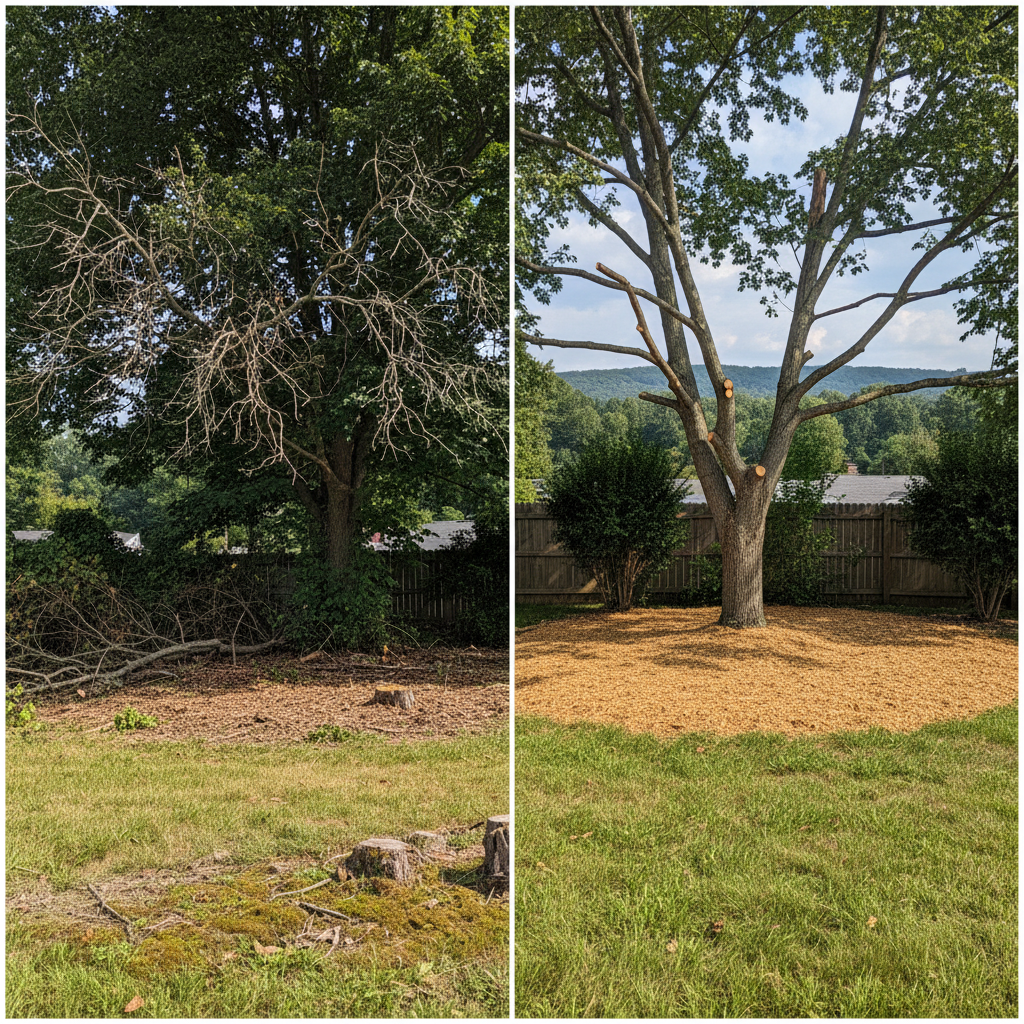
Tree Pruning: To Trim or To Top? What Morgantown Homeowners Need to Know
Got a tree that's getting a little too big for its britches? Or maybe you're worried about branches over your roof? When it comes to managing tree size and health, you've really got two main approaches people consider: proper pruning (sometimes called 'thinning' or 'reduction pruning') and something called 'topping.' I've seen a lot of trees in Morgantown over the years, from Suncrest to the older homes downtown, and I can tell you straight up, these two methods are not created equal.
What's the Difference Between Pruning and Topping?
Let's break it down simply. When we talk about proper pruning, we're talking about making strategic cuts to remove dead, diseased, or crossing branches. We're also looking to improve the tree's structure, reduce its overall size without butchering it, and maintain its natural shape. The goal is always the tree's long-term health and your safety.
Topping, on the other hand, is when someone just cuts off the top of the tree, or a significant portion of its main branches, often leaving stubs. It's usually done to drastically reduce height or width quickly. It might seem like a fast fix, but trust me, it's a shortcut that creates more problems than it solves.
Cost: Upfront vs. Long-Term
You might think topping is cheaper initially. And sometimes, it is. It's a quicker job for someone who doesn't know what they're doing, so they might charge less. But that's where the 'penny wise, pound foolish' saying comes in. A proper pruning job, done by a certified arborist or a reputable company like Mars Family Tree Service, might cost a bit more upfront because it requires skill, knowledge of tree biology, and careful execution.
However, topping almost always leads to higher costs down the road. Those stubs left behind? They'll sprout dozens of weak, fast-growing shoots. These 'water sprouts' are poorly attached and prone to breaking, especially with our heavy snows and ice storms we get here in WV. That means you'll need more frequent pruning to manage the mess, or worse, you'll be paying for emergency branch removal after a storm. Plus, a topped tree is stressed, making it more susceptible to disease and insect infestation, which can lead to costly treatments or even removal.
Durability and Tree Health
This is where proper pruning shines and topping utterly fails. When you prune correctly, you're helping the tree become stronger and more resilient. You're removing weak points and encouraging healthy growth. The tree heals over the smaller, clean cuts we make, compartmentalizing the wound and protecting itself.
Topping, though? It's a massive wound. It stresses the tree incredibly, reducing its ability to photosynthesize because it's lost so much foliage. This stress can lead to:
- Starvation: The tree can't produce enough food.
- Sunburn: Bark that was previously shaded is suddenly exposed, leading to damage.
- Insect and Disease Invasion: Open, large wounds are perfect entry points for pests and pathogens.
- Rot: The stubs often rot, creating hollows and weakening the entire tree structure.
Maintenance: A Never-Ending Cycle vs. Controlled Growth
With proper pruning, you're looking at maintenance every few years, depending on the tree species and its growth rate. We're guiding its growth, keeping it healthy, and addressing issues before they become major problems. It's a proactive approach.
Topping, however, creates a cycle of endless, expensive maintenance. Those weak water sprouts I mentioned? They grow back incredibly fast, often reaching their original height (or more) within a couple of years. So, you'll be calling someone back sooner, and every time they 're-top' it, they're just compounding the damage and weakening the tree further. It's a treadmill you don't want to be on.
Appearance: Natural Beauty vs. Ugly Stubs
Let's be honest, a properly pruned tree looks good. It maintains its natural form, its canopy is balanced, and it enhances your property's curb appeal. It's a beautiful, living part of your landscape.
A topped tree? It's often called 'hat-racked' or 'lion-tailed' because of its unnatural, disfigured appearance. It looks like someone took a hatchet to it. Those ugly stubs and the bushy, weak regrowth are not just unhealthy; they're an eyesore. It can actually decrease your property value, not increase it.
My Recommendation for Morgantown Homeowners
For almost every situation, I'm going to tell you to go with proper pruning. It's better for the tree, safer for your property, and more cost-effective in the long run. There are very, very few instances where topping is even considered, and those are usually extreme cases like utility line clearance where specific regulations demand it, or for specific types of pollarding (a very specialized pruning technique that's not what most people mean by 'topping').
If you're worried about a tree's size, its proximity to your house, or just want to make sure it's healthy, give us a call at Mars Family Tree Service. We'll come out, take a look, and give you an honest assessment of what your trees need. We'll explain the right way to prune them to keep them strong, beautiful, and safe for years to come. Don't let someone talk you into topping your trees; it's a decision you'll likely regret.